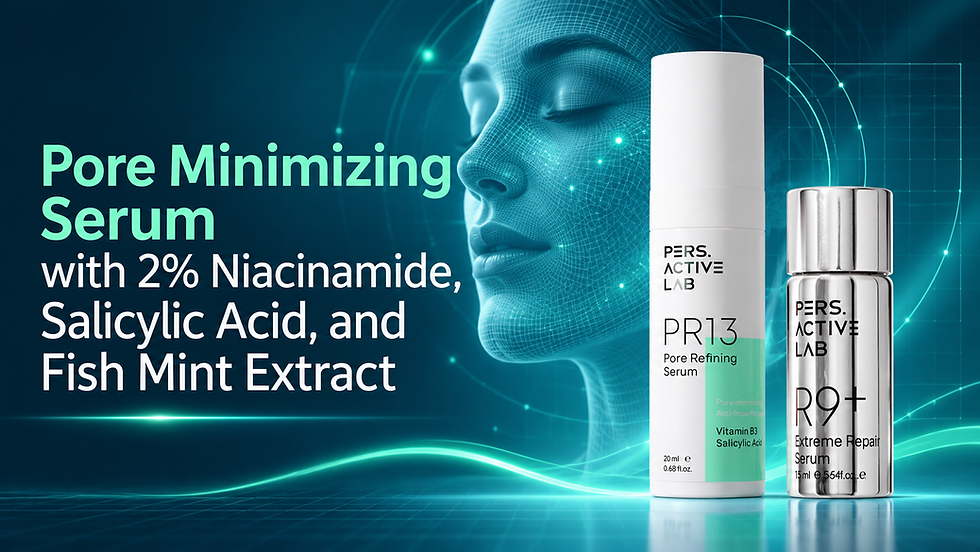
Pore Minimizing Serum with 2% Niacinamide, Salicylic Acid, and Fish Mint Extract

Visible pores are a common concern, especially for people with oily and combination skin. Excess sebum, dead skin cell buildup, and clogged pores can make skin texture appear uneven. While pores cannot be permanently closed, the right skincare ingredients can help reduce their visible appearance.
A pore minimizing serum containing niacinamide and salicylic acid can help address these concerns. Niacinamide supports oil balance, strengthens the skin barrier and improves the appearance of uneven skin texture. Salicylic acid works by exfoliating inside pores, helping remove accumulated dead skin cells and reducing blackhead formation.
Finding the right skincare routine can make a noticeable difference in how your skin looks and feels. Ingredients such as niacinamide and salicylic acid are particularly useful because they address two common factors behind visible pores: excess oil and clogged skin. When combined with soothing botanical ingredients like fish mint extract, they can offer a balanced approach to everyday pore care.
Why Do Pores Become More Visible?
Pores are natural openings in the skin that allow oil and sweat to reach the surface. They are essential for maintaining normal skin function, but sometimes they become more noticeable than we would like.
There isn't just one reason behind enlarged pores. Several factors can influence their appearance.
Excess oil production: Sebaceous glands produce sebum to keep the skin lubricated. However, when too much oil accumulates, pores may appear larger, particularly around the nose and forehead.
Dead skin cell buildup: Skin naturally sheds dead cells, but when they accumulate on the surface or mix with excess oil, they can contribute to clogged pores and blackheads.
Reduced skin elasticity: As we age, collagen production gradually decreases. The surrounding skin may lose some firmness, making pores appear more prominent.
Sun exposure: Frequent exposure to UV rays can contribute to collagen damage and changes in skin texture, making visible pores more noticeable.
Genetics: Natural pore size also varies from person to person. Some individuals are simply more likely to have visible pores because of their skin type and genetic characteristics.
Understanding these factors is important because effective pore care should address the underlying skin concerns rather than simply focusing on making pores look smaller.
How Can a Pore Minimizing Serum Help Improve Skin Texture?
A pore minimizing serum is designed to improve the appearance of enlarged pores by addressing excess oil, congestion and uneven skin texture.
It does not physically close pores or permanently change their natural size. Instead, suitable ingredients help maintain cleaner-looking pores and healthier-looking surrounding skin.
For example, people with oily skin may benefit from ingredients that help regulate sebum, while those experiencing blackheads may need gentle exfoliation.
A well-formulated serum can combine these approaches without requiring several different products.
When choosing a serum, look beyond attractive packaging and marketing claims. Pay attention to the ingredients, their concentrations, and whether the formulation is suitable for your skin type.
Three Ingredients That Make a Difference in Pore Care
The combination of niacinamide, salicylic acid and fish mint extract brings together different skincare benefits. Each ingredient has a distinct role, making it important to understand how they work.
1. Niacinamide: Supporting Oil Balance and Skin Health
Niacinamide, also known as vitamin B3, is widely used in skincare products for oily, combination and uneven-textured skin.
A 2% concentration can be a useful addition to a routine focused on maintaining balanced skin.
Some of its key benefits include:
Helps manage excess sebum.
Supports the natural skin barrier.
Improves the appearance of uneven skin tone.
Helps maintain skin hydration.
Supports smoother-looking skin texture.
One reason niacinamide is popular is its versatility. It can be included in routines targeting multiple concerns without relying on aggressive exfoliation.
For people dealing with visible pores, managing excess oil can help make the skin look more balanced throughout the day.
2. Salicylic Acid: Helping Clear Pore Congestion
If blackheads and clogged pores are among your biggest concerns, salicylic acid is an ingredient worth understanding.
It belongs to the beta-hydroxy acid (BHA) family and is oil-soluble. This allows it to work with the oil present inside pores and help loosen accumulated dead skin cells.
Its skincare benefits include:
Helps exfoliate inside the pores.
Supports the removal of dead skin cell buildup.
Helps reduce blackhead formation.
Improves the appearance of congested skin.
Promotes smoother-looking skin texture.
Salicylic acid is particularly relevant for oily and acne-prone skin. However, more is not always better. Excessive exfoliation can cause dryness, irritation and sensitivity.
Start gradually and avoid combining too many exfoliating products in the same routine.
3. Fish Mint Extract: Adding Botanical Skin-Soothing Support
Fish mint, scientifically known as Houttuynia cordata, is a botanical ingredient used in various skincare formulations.
It contains naturally occurring compounds with antioxidant properties and is valued for its skin-conditioning potential.
In a pore-care formulation, fish mint extract can complement active ingredients by providing additional botanical support.
Its potential benefits include:
Helps condition the skin.
Provides antioxidant compounds.
Complements soothing skincare formulations.
Supports a balanced approach to caring for oily and blemish-prone skin.
Although fish mint extract can be a useful supporting ingredient, it should not be considered a substitute for established ingredients such as salicylic acid when addressing pore congestion.
Pore Tightening Serum vs. Pore Minimizing Serum: What Should You Choose?
These two terms are frequently used in the skincare industry, but they do not necessarily describe completely different products.
A pore tightening serum generally focuses on improving the appearance of skin firmness and texture. A pore minimizing serum usually targets visible pores through oil management, exfoliation, and skin conditioning.
The actual benefits depend on the formulation rather than the product name.
For example, a serum containing niacinamide may help manage excess oil, while salicylic acid can help address pore congestion. Both ingredients can contribute to smoother-looking skin.
When comparing products, consider your main concern:
Excess oil: Look for niacinamide and lightweight formulations.
Blackheads: Consider products containing salicylic acid.
Uneven texture: Look for suitable exfoliating and skin-conditioning ingredients.
Skin sensitivity: Prioritize gentle formulations and barrier-supporting moisturizers.
A face serum for open pores should fit comfortably into your existing skincare routine rather than introducing unnecessary irritation.
How to Include a Serum for Open Pores in Your Daily Routine
Consistency is more important than using multiple products. A simple routine can help maintain skin balance while allowing active ingredients to do their job.
Morning Routine
Step 1: Cleanse gently
Use a mild facial cleanser to remove overnight oil and impurities. Avoid harsh cleansers that leave your skin feeling tight.
Step 2: Apply your serum
Apply a few drops of your chosen serum to clean, dry skin. Spread it gently across the face, focusing on areas where pores are more visible.
Step 3: Moisturize
Use a lightweight, non-comedogenic moisturizer. Even oily skin needs hydration to maintain a healthy barrier.
Step 4: Apply sunscreen
Finish with broad-spectrum SPF 30 or higher. Daily sun protection helps protect collagen and prevent UV-related skin damage.
Evening Routine
Step 1: Remove dirt and sunscreen
Cleanse your face to remove accumulated oil, sunscreen and other impurities.
Step 2: Apply your serum
Use the serum according to its product instructions and your skin's tolerance. If it contains salicylic acid, introduce it gradually, particularly if you have sensitive skin.
Step 3: Support skin recovery
Finish with a suitable moisturizer to maintain hydration and support overnight skin barrier recovery.
Avoid layering several exfoliating acids or strong active ingredients until you understand how your skin responds.
Why Skin Barrier Health Should Come First
Many people become so focused on reducing visible pores that they overlook an equally important part of skincare: maintaining a healthy skin barrier.
Frequent exfoliation, harsh cleansers and excessive use of active ingredients can leave the skin dry, irritated and sensitive. This can make an existing skincare concern even more difficult to manage.
The Repair First approach focuses on keeping the skin comfortable and balanced before introducing stronger treatments.
A few simple habits can help:
Choose gentle cleansing products.
Maintain regular moisturization.
Avoid unnecessary exfoliation.
Use sunscreen consistently.
Pay attention to ingredients that trigger irritation.
This is also where The Power of Less becomes relevant. Rather than combining numerous products with overlapping functions, focus on essential actives in appropriate concentrations.
A simple routine that your skin tolerates is often more sustainable than an unnecessarily complicated one.
How Skin PAL Makes Pore Care More Personalized
Not everyone experiences enlarged pores for the same reasons. One person may struggle with excess oil, while another may experience blackheads, dehydration or changes in skin elasticity.
This is why choosing skincare should involve understanding individual skin needs rather than following the same routine as everyone else.
Skin PAL takes an AI Personalization approach to skincare, helping users understand visible skin concerns and make more informed product and routine decisions.
Its approach includes:
AI skin analysis: Helps identify visible skin concerns.
Skin Score: Provides an additional way to understand aspects of skin condition.
Personalized skincare routine: Connects skin concerns with suitable ingredients and skincare steps.
Progress tracking: Helps users monitor changes over time rather than relying on a single skin assessment.
Lifestyle guidance: Encourages attention to hydration, UV protection and daily skincare habits.
Skin PAL also features PR13 Pore Refining Serum, formulated with 2% niacinamide, salicylic acid, and fish mint extract.
The idea is to make skincare more understandable by connecting ingredients with specific concerns and encouraging consistent, personalized routines instead of unnecessary product layering.
Final Thoughts
Visible pores are a normal part of having skin, but their appearance can change depending on oil production, congestion, sun exposure, and natural skin aging.
A thoughtful skincare routine can help address these factors without relying on aggressive treatments. Combining niacinamide for oil balance, salicylic acid for pore congestion, and fish mint extract for skin-conditioning support offers a practical approach to everyday pore care.
Whether you are considering a pore tightening serum or looking for a suitable face serum for open pores, focus on ingredient compatibility, skin barrier health, and realistic expectations.
Healthy-looking skin does not require an endless collection of products. Understanding your skin, choosing the right ingredients, and following a consistent routine can make a much bigger long-term difference.
Frequently Asked Questions
1. Which ingredients should I look for in a pore minimizing serum?
Niacinamide and salicylic acid are useful ingredients to consider. Niacinamide helps manage excess oil and supports the skin barrier, while salicylic acid helps exfoliate inside pores and address congestion. Botanical ingredients such as fish mint extract can provide additional skin-conditioning support.
2. Can a pore tightening serum permanently close enlarged pores?
No. Pores are natural skin structures and cannot be permanently closed using topical serums. However, suitable skincare ingredients can help reduce their visible appearance by addressing excess oil, clogged pores and uneven skin texture.
3. Is a face serum for open pores suitable for oily skin?
Yes, many pore-care serums are formulated with oily and combination skin in mind. Ingredients such as niacinamide and salicylic acid can be particularly useful. Choose a lightweight formulation and avoid excessive exfoliation to maintain skin comfort.
4. How long does it take to notice improvements in pore appearance?
The timeframe varies depending on your skin type, formulation and consistency of use. Some people may notice changes in oiliness earlier, while improvements in skin texture and the appearance of pores can take several weeks. Regular cleansing, moisturization and sunscreen use also play important roles.


Comments